
Which Charger Is Right for Me?

With more manufacturers releasing new electric vehicle (EV) models that offer increased battery capabilities, and a wide range of charger power levels, you may be wondering which charger is right for your vehicle. We’ve written about the number of factors that can impact your charging speed, and one of the most important factors is the car’s maximum rate of charge and specific charging curve. If that sounds like technical lingo, don’t worry, we’ve got you covered with a glossary of terms in our EV 101 series. To help drivers power up as quickly as possible given their vehicle’s battery specifications, EVgo has created a handy reference you can use to figure out which EV models will get the best charging performance at different charger power levels.
Our list includes every EV model currently on the market, grouped by power level, including brand new and older and/or discontinued models, so you can browse easily. Check out the lists below to find the make and model of the EV you drive to find your charger match. Keep in mind that maximum charge rates are just that—maximums—and most vehicles only charge at their “peak” kW for a short while before tapering off as the battery fills up (that’s the charge curve we referenced above).
These models have max charge rates of up to 59kW, so a 50kW charger will get the job done:
BMW i3 (2014-2022)
Chevy Bolt (2017-2023)
Chevy Bolt EUV (2017-2023)
Chevy Spark EV
Ford Focus Electric
LiveWire One Motorcycle
Honda Clarity
Kia Soul EV
Madza MX-30
Mini Cooper SE Electric
Mini Cooper SE Electric Hardtop
Nissan LEAF
Volkswagen E-Golf
These models have max charge rates of 60-199kW, so look for a 100kW or 200kW charger:
Acura ZDX
Audi e-tron
Audi Q4 e-tron
Audi Q8 e-tron (2024 and 2025)
BMW i7
BMW iX
Cadillac Celestiq
Cadillac LYRIQ
Cadillac Optiq
Cadillac Vistiq
Chevy Blazer EV
Chevy Bolt (2027+)
Chevy Equinox EV
Dodge Charger
Fiat 500e (2024+)
Ford F-150 Lightning
Ford F-150 Lightning (Pro Edition)
Ford Mustang Mach-E
Honda Prologue
Hyundai Ioniq EV
Hyundai Kona EV
Jaguar I-pace
Kia Niro EV
Lexus RZ
Mercedes-Benz EQB
Mercedes-Benz EQE
Nissan ARIYA
Nissan LEAF Plus
Polestar 2
Subaru Solterra
Subaru Trailseeker
Subaru Uncharted
Toyota bZ4X
Toyota C-HR
VinFast VF8
Volkswagen ID.4
Volvo C40 Recharge
Volvo EX40 / XC40 Recharge
Volvo EX30
These models have max charge rates of 200-350+kW—the fastest on the market—so look for 350kW high-power chargers:
Audi A6 e-tron
Audi e-tron GT
Audi Q6 e-tron
BMW i4
BMW i5
Cadillac Escalade IQ
Chevy Silverado EV
Fisker Ocean
Genesis GV60
Genesis GV70
Genesis G80
GMC Hummer EV
GMC Sierra EV
Hyundai Ioniq 5
Hyundai Ioniq 6
Hyundai Ioniq 9
Jeep Wagoneer S
Kia EV6
Kia EV9
Lucid Air Dream Edition
Lucid Air Sapphire
Lucid Air Touring
Lucid Gravity
Mercedes-Benz EQS
Polestar 3
Porsche Taycan
Rivian R1S
Rivian R1T
Tesla Model 3, S, S Plaid, X and Y or Cybertruck
Volvo EX90
VW ID.BUZZ
Can I use a higher-powered charger than my vehicle’s maximum charging capability?
You can, but it won’t charge your vehicle any faster. This is because charging speed is dictated by your battery’s specifications, not the charger, so you can’t get any more power than your battery will accept. If you know your EV has a smaller battery and lower max charging rate, it’s generally considered good etiquette not to occupy a higher-powered charger than you need—especially at busy stations—as you may be preventing a vehicle that can accept a faster, higher-powered charge from using that charger.
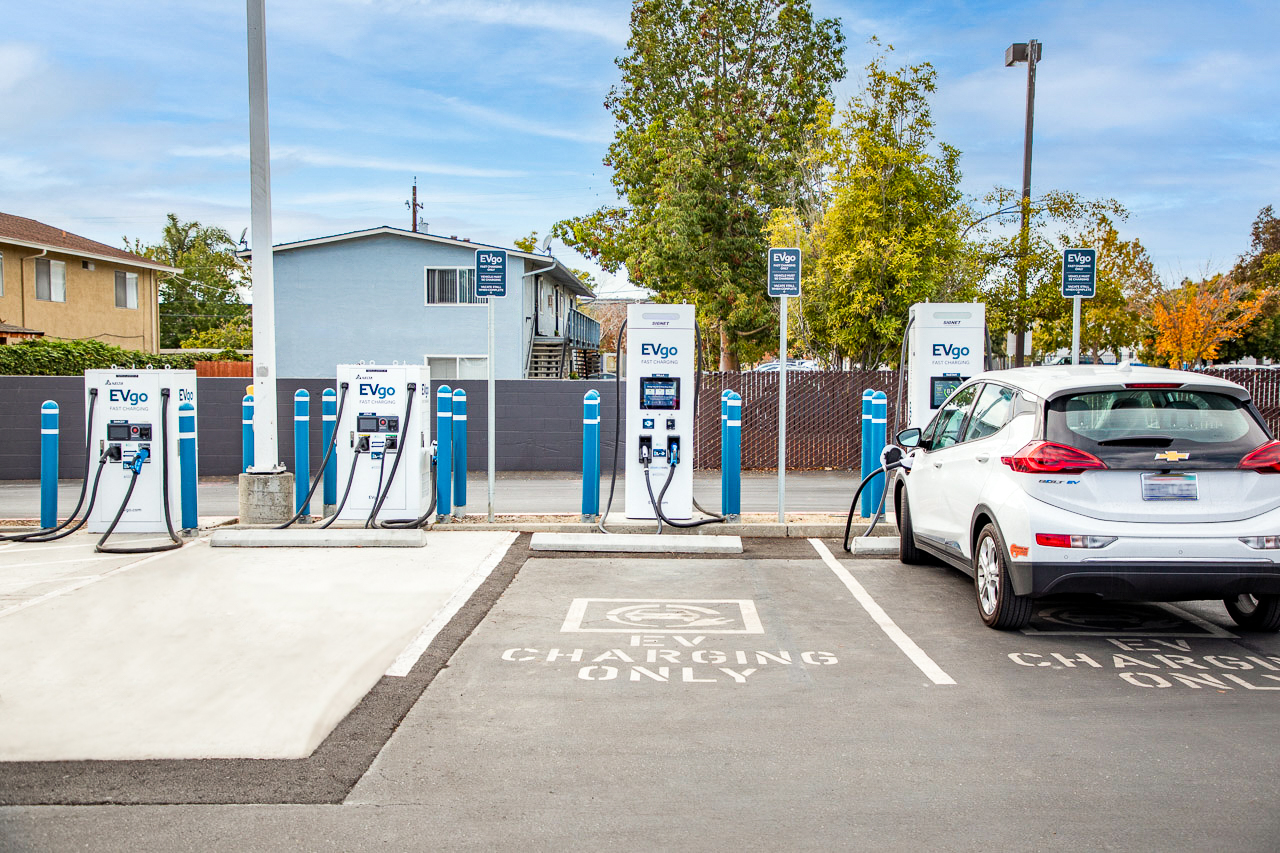
Can I use a lower-powered charger than my vehicle’s maximum charging capability?
Of course! In fact, this option makes great sense when you’re not in a hurry to charge or you have a few things to do while charging, like running errands, grabbing a bite, or taking a walk. Whether your EV has a higher or lower peak DC charge rate, a lower-power charger is a great option if you might be away from your car for a little while.
If you take away one thing from this post, it’s that as much as we love our 350kW high-power chargers, if the EV you drive has a smaller battery or lower charge rate, plugging into one won’t charge your car any faster than a lower-powered charger. And given the charging curves in many of these vehicles, sometimes the difference between using a 150kW and a 350kW charger can be just a few minutes. Regardless, we’re working hard every day to deploy more high-power chargers where you need them!
We hope this post helps you find the information you need to choose the optimum charger for your vehicle. If you want to review some quick facts about current EV models and range, check out our website. If you have any questions about how to charge on our network, send us an email at support@evgo.com.
Source: https://support.fastned.nl/hc/en-gb/sections/4428932764573-Vehicles
Source: https://www.caranddriver.com/features/a40929408/ev-charging-chart-rates/